What's in a Ticker? The Surprisingly Witty and Wild World of Thematic ETFs
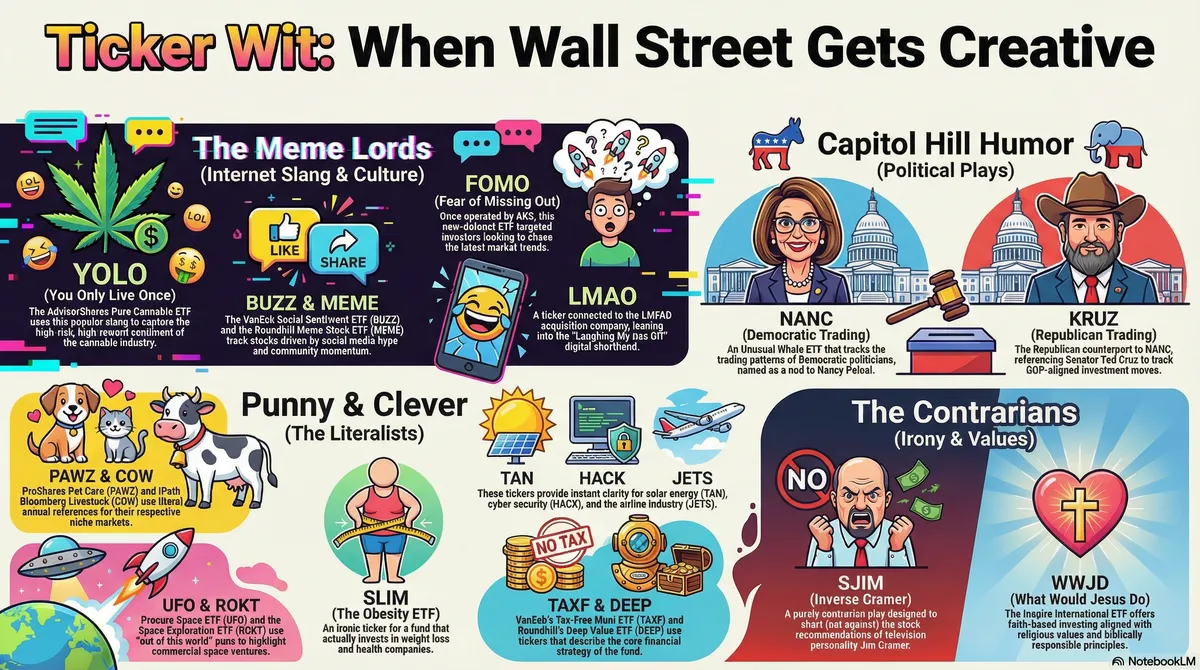
When most people think of stock tickers, they picture a bland collection of functional acronyms—four-letter codes like GOOG or AAPL that simply identify a company. For decades, this was the norm: a practical, uninspired system for organizing the world's largest markets. But in the rapidly expanding universe of Exchange-Traded Funds (ETFs), a new and far more creative language is emerging.
Hidden in plain sight, ETF tickers have become a canvas for witty puns, niche cultural commentary, and savvy marketing. These clever labels are more than just inside jokes for Wall Street; they are sophisticated marketing tools designed to capture attention and capital in an oversaturated marketplace. They are a direct line to an ETF's investment strategy and a powerful hook for a new generation of investors.
This article explores the surprising and insightful trends in ETF naming conventions. From meme culture to political satire, these tickers reveal as much about modern marketing strategy as they do about the financial products they represent.
1. Investing Goes Viral: The Rise of Meme Tickers
One of the most prominent trends is the direct embrace of internet culture, a clear marketing play for a younger, digitally native demographic. Seeking to connect with retail investors fluent in slang and viral terminology, these funds use their tickers to signal a high-risk, community-driven theme. The ticker itself becomes the campaign.
- YOLO: AdvisorShares Pure Cannabis ETF (reflecting the "You Only Live Once" high-risk investment mentality)
- FOMO: AXS FOMO ETF (capturing the "Fear of Missing Out" that drives speculative trading; this fund has since been liquidated, highlighting the high-risk nature of chasing trends)
- BUZZ: VanEck Social Sentiment ETF (investing based on positive social media buzz, famously backed by Dave Portnoy)
- MEME: Roundhill Meme Stock ETF (directly targeting popular "meme stocks")
This strategy blurs the line between finance and entertainment, but by packaging complex investments in the language of a video game, it also risks encouraging under-informed decisions that are driven more by novelty than by sound financial analysis.
2. A House Divided: Putting the "Politics" in Portfolio
A more recent development is the emergence of ETFs explicitly marketing to an investor's political identity. These funds allow investors to trade based on the reported activities of specific political figures, and their tickers use direct, sometimes satirical references to define their strategy and attract a hyper-targeted audience.
- NANC: Unusual Whale Democratic Trading ETF (a reference to Nancy Pelosi)
- KRUZ: Unusual Whale Republican Trading ETF (a reference to Ted Cruz)
This trend is a masterclass in niche marketing, illustrating the increasing polarization of culture and its spillover into finance. For these funds, an investor's portfolio becomes another way to express a partisan worldview.
3. Wall Street's Witty Wordplay: The Power of the Pun
Perhaps the most common creative strategy is the simple, clever pun—a classic, broad-appeal marketing tactic. This approach uses witty wordplay to make an ETF's purpose instantly memorable and intuitive, functioning like a billboard in a crowded marketplace. This approach prioritizes instant comprehension and search engine discoverability, a classic top-of-funnel marketing tactic that is designed to capture investors at the moment of inquiry.
- PAWZ: ProShares Pet Care ETF
- UFO: Procure Space ETF (investing in space commercialization)
- COW: iPath Bloomberg Livestock ETN
- HACK: ETFMG Prime Cyber Security ETF
- JETS: US Global Jets ETF
- SLIM: The Obesity ETF (investing in weight loss and health companies)
These intuitive tickers are powerful marketing assets, cutting through the financial jargon to communicate a fund's core idea with just a few letters.
4. The Contrarian and the Curious: Trading on Beliefs
Some of the most fascinating tickers represent hyper-niche marketing aimed at a specific conviction or community—a financial "dog whistle." These ETFs cater to investors with unique worldviews, allowing them to put their money behind unconventional or deeply held beliefs.
The SJIM (Inverse Cramer ETF) embodies this contrarian spirit, with a strategy built entirely on betting against the stock recommendations made by television personality Jim Cramer. On the other end of the spectrum is the WWJD (Inspire International ETF), which takes a "What Would Jesus Do" approach to biblically responsible, faith-based investing. These products signify the "democratization of conviction," allowing retail investors to execute complex, belief-driven trades that were once inaccessible.
Conclusion: A Ticker Is Worth a Thousand Words
ETF tickers have evolved far beyond their original purpose as simple identifiers. They have become sophisticated instruments for marketing, storytelling, and cultural commentary. The ticker has become the thesis, the brand, and the joke all rolled into one. The question for investors is no longer just "What's in your portfolio?" but "What's in a name?"
Keep Exploring
- ETF Screener — Search over 1,000 tickers by name, strategy, or issuer
- ETF Comparator — Compare any two ETFs side by side
- Income ETF Launches 2024–2025 — The explosion of new tickers from YieldMax, Roundhill, GraniteShares, and more
- WPAY to TOPW: What's Changing — When a ticker rebrand signals a real strategy shift
- Dividend Aristocrats: Surprising Truths — The opposite end of the spectrum from meme tickers