Free Calculator
Dividend Income Calculator
See how much monthly and annual income your portfolio can generate. Plug in your investment amount and the average yield of your holdings to project the cash flow you can model — before and after tax.
Your inputs
Enter your portfolio details to estimate income.
How this dividend income calculator works
The Dividend Vision income calculator multiplies your invested capital by the average annual dividend yield of your portfolio to estimate gross income, then breaks that figure down by distribution period and applies your effective tax rate to show take-home income. It assumes a flat yield across the year — in practice, distributions vary, especially for option-income ETFs.
How to use it
- Investment amount. The total dollars deployed into income producing assets. Exclude cash drag that isn’t earning a dividend.
- Average dividend yield. The blended yield across your holdings, weighted by position size. Use a consistent measurement period and test several rates; past payouts and annualized recent payments can change.
- Distribution frequency. The schedule to model. Weekly divides annual income by 52; the monthly and weekly totals are averages, not a payment calendar.
- Effective tax rate. Your blended rate on dividends. Use 0% for current tax within a tax-sheltered account; withdrawal taxes may still apply. For taxable accounts, estimate a blended rate from the actual tax categories.
Common questions
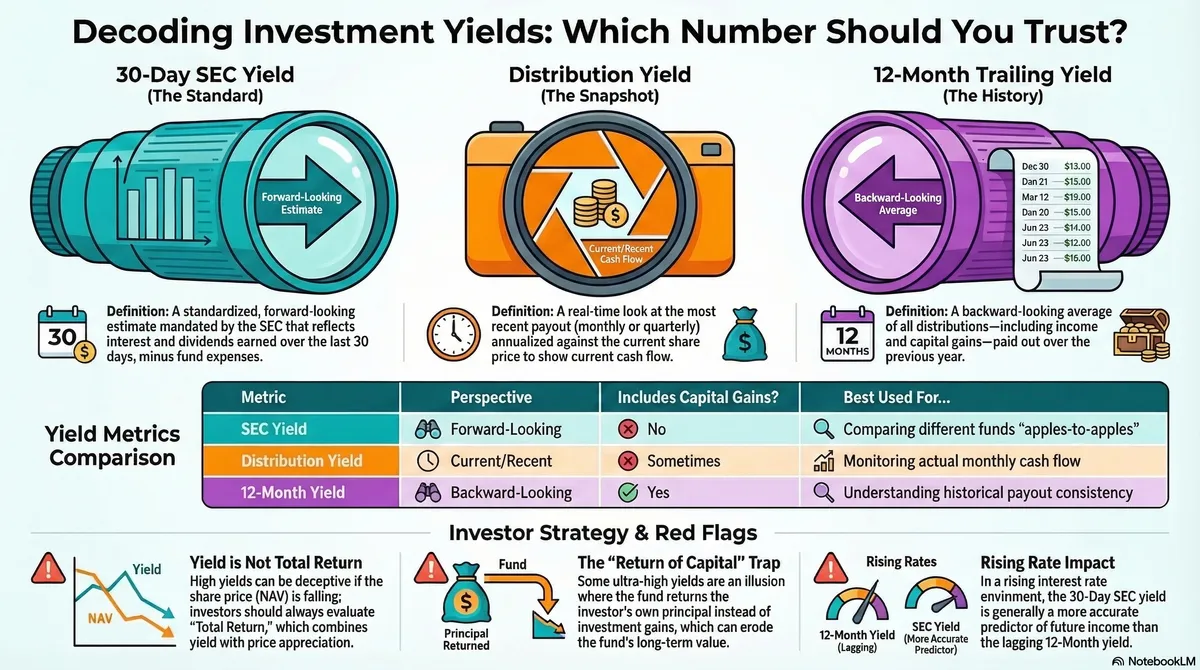
Should I use SEC yield or distribution yield? Distribution yield summarizes past payments or annualizes a recent payment, depending on the issuer. It does not predict the next 12 months. SEC yield measures standardized net investment income and can exclude option-related amounts. Use either only with an understanding of its definition and the scenario you want to model. See our SEC vs. distribution yield guide for the difference.
Does this account for reinvested dividends? No — this calculator shows income at a single point in time. For compounding via DRIP, use the DRIP calculator.
What tax rate should I use? Qualified dividends are taxed at long-term capital gains rates (0%, 15%, or 20% federal). Non-qualified ordinary dividends use ordinary income rates. Funds can also distribute capital gains, Section 199A dividends, or tax return of capital, which require different treatment. Use final tax documents, not an ETF label. The tax estimator can give you a more detailed breakdown.
Take it further with Dividend Vision
- Set a specific income target with the $1,000 per month or $5,000 per month planning pages.
- Find ETFs that match your yield target with the ETF Screener.
- Compare your portfolio yield against benchmarks on the Portfolio Vision dashboard.
- Project compounding growth with the yield-on-cost calculator.